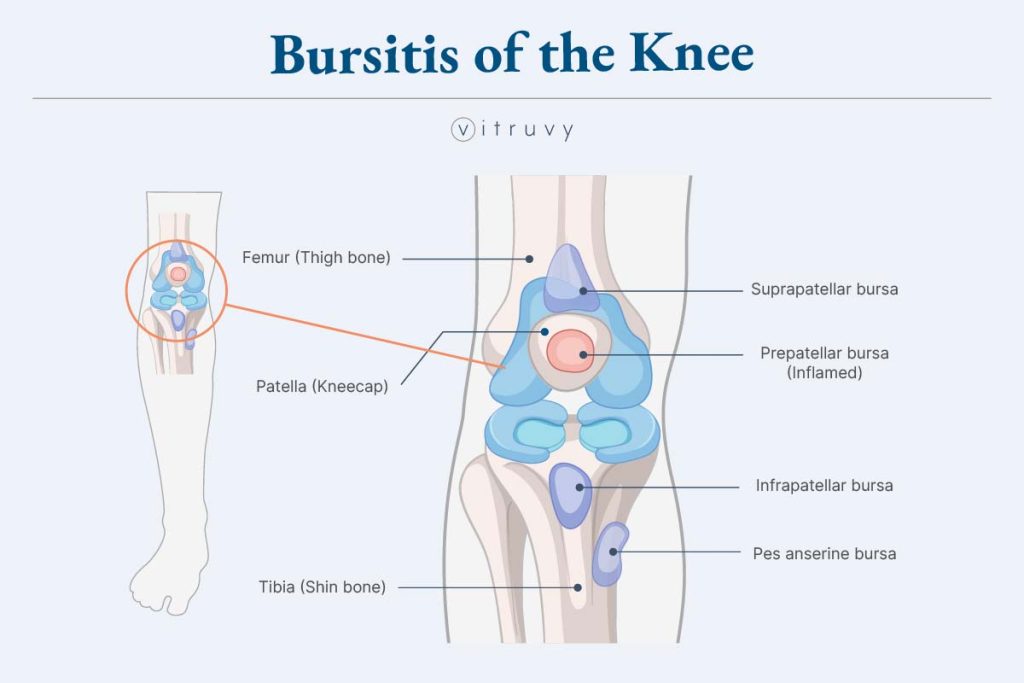
Knee bursitis happens when the small, fluid-filled sacs near your knee joint (called bursae) become inflamed. These sacs normally help reduce friction between bones, tendons, muscles, and skin—but when they swell, they can cause pain, tenderness, and limit your movement.
What Causes It?
Knee bursitis can develop from:
- Repetitive motion or pressure—like kneeling often on hard surfaces
- A direct injury or blow to the knee
- An infection in the bursa
- Other conditions like arthritis or gout
Types of Knee Bursitis
The pain and swelling can show up in different spots depending on which bursa is affected:
- Prepatellar (in front of the kneecap – “housemaid’s knee”)
- Infrapatellar (just below the kneecap)
- Suprapatellar (just above the kneecap)
- Pes anserine (inner side of the knee, below the joint)
What You Might Feel
- Swelling and warmth around the knee
- Pain when you move or touch the area
- Redness or tenderness
- Trouble bending or extending your leg
- If infection is involved, you might also have fever or chills
What a Chatbot Can’t Tell You
Knowing you have “knee bursitis” is just the start. What really matters next is what to do about it. This is where a specialist—not a search engine—makes all the difference.
Here are three real-world questions better answered by a real orthopedic expert:
- “Do I need imaging or can this be treated conservatively?”
Only a specialist can weigh your health history, activity level, and exam results to decide if you need imaging or if rest, physical therapy, and anti-inflammatories are enough.
- “Is my knee pain actually bursitis—or something else entirely?”
Bursitis shares symptoms with arthritis, meniscus tears, or ligament strains. A trained knee specialist can tell the difference—and fast.
- “When can I safely get back to the activities I love?”
Whether it’s hiking, pickleball, or keeping up with grandkids, recovery isn’t one-size-fits-all. A physician can create a tailored plan to get you moving again.
Get the Answers That Matter
At Vitruvy, we combine clinician-designed assessments with real orthopedic expertise—so you skip the wait and get help fast.
Take our no-cost assessment to learn more about your condition and get matched with a top knee specialist near you.