Is Vitruvy Right for You? Find Your No-Cost Assessment >
Is Vitruvy Right for You?
Find Your No-Cost Assessment >

Understanding and Managing Shoulder Impingement: What You Need to Know
If you’re an athlete, fitness enthusiast, or someone who just loves staying active, shoulder pain can be a frustrating and limiting experience. Whether you’re swimming, lifting weights, playing tennis, or even working at a desk, shoulder impingement is a common issue that can make your daily activities feel impossible. Let’s break down what shoulder impingement is, why it happens, and how you can get back to doing what you love.
What is Shoulder Impingement?
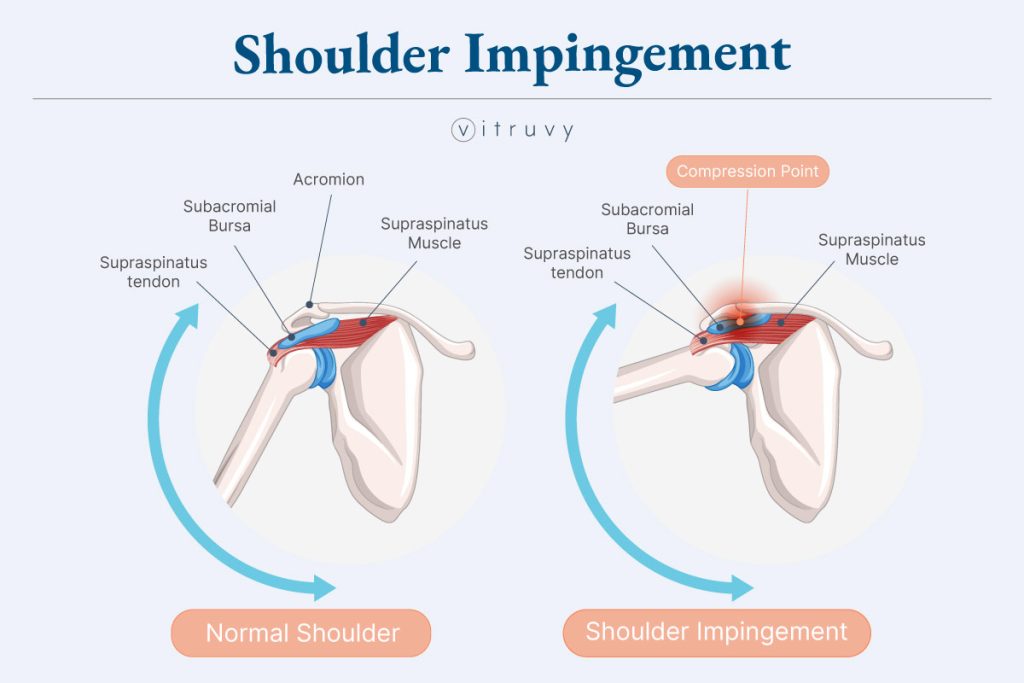
Shoulder impingement occurs when the tendons of the rotator cuff muscles become irritated and inflamed as they pass through the narrow space beneath the acromion (the top part of the shoulder blade). This irritation can result in pain, weakness, and reduced range of motion. It’s most often caused by repetitive overhead movements or poor posture, but can also result from injury or age-related degeneration. (Cleveland Clinic)
Who is at Risk?
Shoulder impingement can affect anyone, but it’s particularly common among:
- Athletes: Those who perform frequent overhead motions, such as swimmers, tennis players, baseball players, and volleyball enthusiasts.
- Active Workers: Individuals with jobs requiring repetitive lifting or overhead work, like construction or painting.
- Older Adults: Age-related changes in the shoulder joint and surrounding tissues can increase the risk of impingement.
- Fitness Enthusiasts: Weightlifters and cross-training athletes often experience shoulder impingement due to improper form or overuse.
Types of Shoulder Impingement
According to Cleveland Clinic, shoulder impingement can be categorized into more specific issues, including:
- Rotator Cuff Tendinitis: This occurs when the rotator cuff tendons become swollen or irritated. With four tendons supporting the rotator cuff to help move your shoulder joint, anything that irritates or damages these tendons can lead to swelling and impingement.
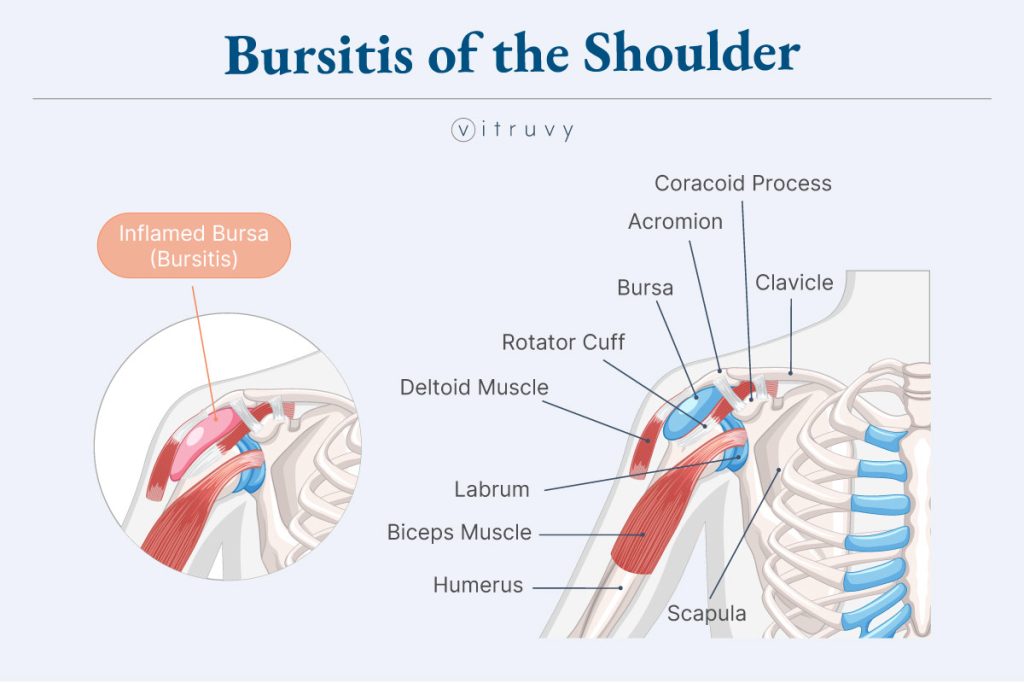
- Shoulder Bursitis: Inflammation of the bursa (a fluid-filled sac that cushions the joint) between the rotator cuff tendons and acromion can cause impingement. When this bursa becomes swollen, it reduces the space available for the tendons to move, resulting in pain and stiffness.
- Acromion Deformity: The acromion, which is usually flat, can be curved or hooked in some individuals, leading to pinching of the rotator cuff tendons. Bone spurs can also develop on the acromion over time, further contributing to impingement.
Symptoms of Shoulder Impingement
Common symptoms include:
- Pain: Sharp or aching pain in the shoulder, particularly when lifting the arm or reaching overhead.
- Weakness: Reduced strength in the shoulder, making it difficult to perform daily activities.
- Limited Range of Motion: Difficulty moving the shoulder, especially when lifting the arm above the head.
- Tenderness: Discomfort when pressing on the shoulder.
Treatment Options
Managing shoulder impingement often starts with non-surgical approaches aimed at reducing pain, restoring function, and preventing further injury. Treatment options can include:
- Rest and Activity Modification: Avoiding activities that worsen the pain to allow the shoulder to heal.
- Physical Therapy: A customized exercise program to strengthen shoulder muscles, improve flexibility, and correct posture.
- Medications: OTC anti-inflammatory medications can help reduce pain and inflammation. In some cases, corticosteroid injections may be recommended.
- Ice and Heat Therapy: Ice packs can reduce swelling and pain, while heat therapy can relax muscles and improve blood flow.
- Surgical Intervention: If other treatments fail, arthroscopic surgery may be considered to remove inflamed tissue and create more space in the subacromial area, relieving impingement.
Prevention Tips
To avoid shoulder impingement, consider the following:
- Maintain Good Posture: Keeping shoulders back and down helps maintain alignment and reduce stress on the joint.
- Strengthen Shoulder Muscles: Regular exercises targeting the rotator cuff and surrounding muscles can enhance support.
- Incorporate Stretching: Improved flexibility can reduce the risk of impingement.
- Use Proper Technique: Whether in sports or daily activities, focusing on form can prevent overuse injuries.
Take the First Step Towards Relief
Shoulder impingement can feel like a setback, but it doesn’t have to keep you from enjoying your active lifestyle. Vitruvy offers a no-obligation self-assessment to help you pinpoint the cause of your pain and guide you toward the best treatment options. Take the first step toward pain relief and reclaim your mobility.